Remote Health Staffing in the USA
The healthcare industry in the United States is undergoing a major transformation. Rising labor costs, staff shortages, and increasing patient demand are forcing clinics and hospitals to rethink how they hire and manage teams.
Traditional hiring models are no longer enough.
This is where remote healthcare staffing is changing the game.
From virtual assistants to remote medical scribes and billing specialists, healthcare providers are now using remote staffing solutions to build efficient, scalable, and cost-effective teams.
In this guide, we’ll explore how healthcare virtual staffing works, why clinics are choosing to hire remote teams, and how this model is shaping the future of medical hiring.
What Is Remote Healthcare Staffing?
Remote healthcare staffing is a hiring model where healthcare providers build teams of professionals who work remotely but integrate directly into clinical workflows.
These remote professionals may include:
- Virtual medical receptionists
- Medical scribes
- Billing and coding specialists
- Insurance verification experts
- Administrative assistants
Unlike traditional outsourcing, remote staffing allows clinics to hire remote team members who function as part of their internal operations, not just external vendors.
This creates a hybrid workforce that combines in-house staff with virtual support.

Why Remote Healthcare Staffing Is Growing in the USA
Several key trends are driving this shift.
1. Healthcare Staffing Shortages
The U.S. healthcare system is facing a growing shortage of skilled professionals, making it difficult for clinics to hire locally.
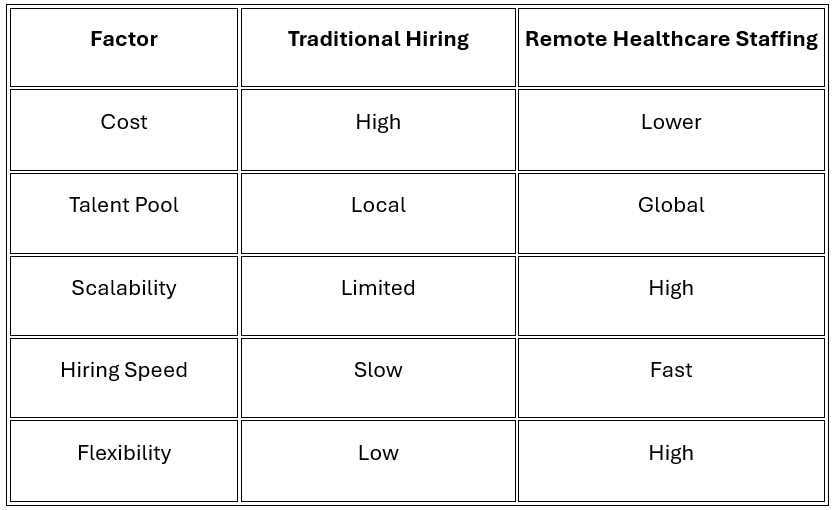
Remote staffing expands the talent pool beyond geographic limitations, allowing providers to access skilled professionals from anywhere.
2. Rising Operational Costs
Hiring in-house staff involves:
- Salaries
- Benefits
- Office space
- Equipment
- Training
Remote staffing reduces these overhead costs significantly, making it a more sustainable solution for clinics.
3. Growth of Telehealth and Digital Healthcare
Telemedicine and digital tools have made remote collaboration easier than ever.
Virtual staffing models allow healthcare professionals to work remotely while still delivering high-quality care and administrative support.
4. Need for Scalable Workforce Solutions
Healthcare demand fluctuates due to seasonal trends, emergencies, and patient volume changes.
Remote staffing allows clinics to scale teams quickly without long hiring processes.
How Remote Staffing Solutions Work in Healthcare
A typical remote staffing solution follows a structured process:
- Identify staffing needs (admin, billing, reception, etc.)
- Hire trained remote professionals
- Provide secure access to systems (EHR, CRM)
- Integrate into daily workflows
- Monitor performance and KPIs
Remote staff work in real time, often during U.S. working hours, ensuring seamless collaboration with in-house teams.
Key Roles in Healthcare Virtual Staffing
Healthcare virtual staffing covers a wide range of roles.
Virtual Medical Receptionists
Handle patient calls, scheduling, and front desk operations.
Remote Medical Scribes
Document patient encounters and manage EHR updates.
Billing and Coding Specialists
Manage claims, insurance verification, and revenue cycle processes.
Administrative Assistants
Support back-office operations and patient communication.
These roles allow clinics to delegate non-clinical tasks efficiently.
Benefits of Hiring a Remote Healthcare Team
1. Significant Cost Savings
Remote staffing eliminates expenses related to office space, equipment, and employee benefits.
Healthcare providers can reduce overhead while maintaining operational efficiency.
2. Access to Global Talent
Clinics are no longer limited to local hiring.
They can access skilled professionals worldwide, ensuring better hiring quality and faster recruitment.
3. Improved Operational Efficiency
Virtual staff handle repetitive administrative tasks, allowing healthcare providers to focus on patient care.
This leads to improved workflow and reduced delays.
4. Reduced Staff Burnout
Administrative overload is a major cause of burnout in healthcare.
Remote staffing redistributes workload and improves job satisfaction for in-house teams.
5. Scalability and Flexibility
Healthcare providers can scale their teams up or down based on demand.
This flexibility ensures consistent service without overstaffing.
6. Better Patient Experience
With dedicated staff handling communication and scheduling:
- Calls are answered faster
- Appointments are managed efficiently
- Patient satisfaction improve
Remote Healthcare Staffing vs Traditional Hiring
Challenges of Remote Healthcare Staffing (And Solutions)
Data Security Concerns
Healthcare data must be protected.
Solution: Use HIPAA-compliant remote staff and secure systems.
Communication Gaps
Remote teams may face communication challenges.
Solution: Use structured workflows, tools, and regular check-ins.
Onboarding and Training
New staff require proper training.
Solution: Work with providers that offer pre-trained healthcare virtual assistants.

Who Should Hire a Remote Healthcare Team?
Remote staffing is ideal for:
- Small clinics with limited budgets
- Growing medical practices
- Multi-location healthcare providers
- Telemedicine companies
- Clinics facing staffing shortages
If administrative workload is slowing your practice, remote staffing is a strong solution.
The Future of Healthcare Virtual Staffing
The future of healthcare hiring is hybrid.
Healthcare organizations are moving toward:
- Remote-first administrative teams
- AI-assisted workflows
- Virtual care models
- Distributed healthcare teams
Remote staffing is becoming essential for modern healthcare operations. Healthcare organizations that adopt early gain a competitive advantage.
How Savvital Helps Clinics Build Remote Healthcare Teams
Savvital provides trained virtual assistants who integrate into healthcare workflows and support clinics with administrative tasks.
With Savvital, clinics can:
- Hire remote teams quickly
- Reduce staffing costs
- Improve workflow efficiency
- Access trained healthcare professionals
- Scale operations easily
Savvital offers cost-effective remote staffing solutions starting at just $14/hour, making it one of the most affordable ways to build a virtual healthcare team.
Final Thoughts
Healthcare is evolving rapidly—and so is hiring.
Remote staffing is no longer just a cost-saving option. It’s a strategic advantage that allows clinics to operate efficiently, scale quickly, and deliver better patient care.
For healthcare providers in the U.S., remote healthcare staffing represents the future of medical hiring.
Frequently Asked Questions
How do remote staffing solutions work in healthcare operations?
Remote staffing solutions integrate trained professionals into clinic workflows using secure systems like EHR platforms. These remote team members handle administrative and documentation tasks while working alongside in-house staff in real time.
Is healthcare virtual staffing secure for patient data?
Yes, when providers follow HIPAA compliance standards. Remote healthcare staff use secure systems, encrypted communication, and role-based access to ensure patient data remains protected.
Can small clinics benefit from hiring remote teams?
Yes. Small clinics often benefit the most because remote staffing reduces payroll costs while improving efficiency and patient communication.
What roles can be outsourced through remote healthcare staffing?
Common roles include medical receptionists, scribes, billing specialists, insurance coordinators, and administrative assistants.
Is remote healthcare staffing the future of medical hiring?
Yes. With rising costs, staffing shortages, and digital healthcare growth, remote staffing is becoming a key part of modern healthcare workforce strategies.
Published on 18 Mar 2026
Author: Noor Ul Ain Liaqat