What Is Virtual Scribing in Healthcare?
Healthcare providers today spend a large portion of their day on documentation instead of patient care. Electronic health records, insurance requirements, and compliance rules have increased the administrative burden for doctors and clinics.
To solve this problem, many healthcare organizations are adopting virtual medical scribes, remote professionals who document patient encounters and manage clinical records in real time.
Understanding what a virtual medical scribe is, how virtual scribing works, and the benefits of remote scribing can help clinics improve efficiency, reduce physician burnout, and deliver better patient care.
What Is a Virtual Medical Scribe?
A virtual medical scribe is a trained healthcare documentation specialist who works remotely to assist physicians by recording patient encounters and updating electronic health records during clinical visits.
Instead of the physician typing notes during or after an appointment, the scribe documents:
- Patient medical history
- Symptoms and clinical findings
- Diagnoses and treatment plans
- Medication prescriptions
- Lab orders and referrals
Most virtual scribes connect to appointments through secure audio or video tools and document interactions directly in the clinic’s EHR system.
This process is known as virtual scribing and is becoming increasingly common in both in-person clinics and telemedicine practices.

What Is Virtual Scribing in Healthcare?
Virtual scribing refers to the remote documentation of patient encounters by a trained scribe who assists healthcare providers with medical charting and clinical records.
In a typical workflow:
- A patient consultation begins.
- The remote scribe listens through secure software.
- The scribe documents the interaction in real time.
- The physician reviews and signs off on the notes.
This workflow allows providers to focus on patient interaction instead of typing notes during the visit.
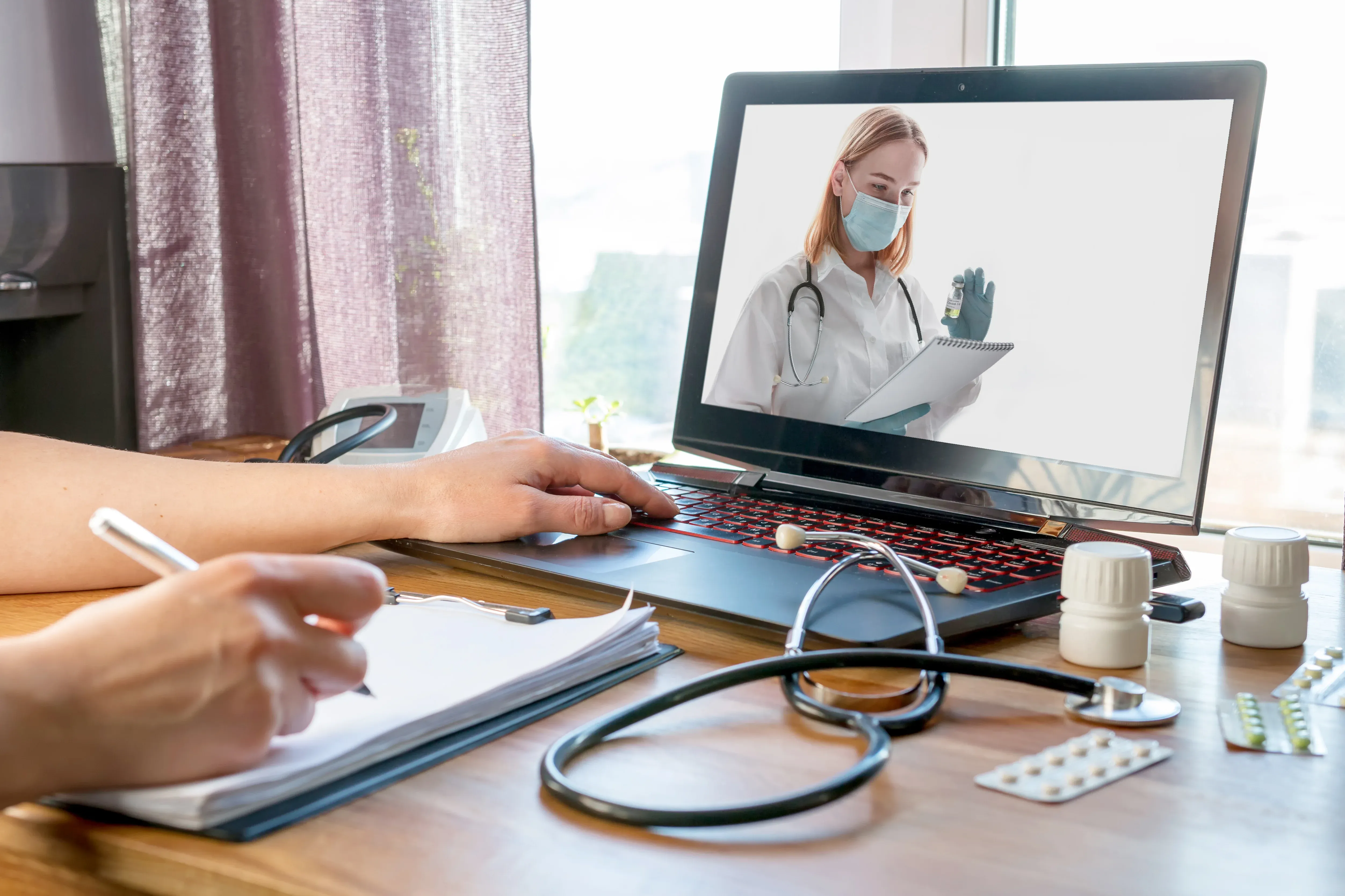
Remote scribing has become especially valuable as healthcare organizations adopt telemedicine and digital record systems.
Roles and Responsibilities of a Virtual Medical Scribe
A virtual medical scribe performs several critical documentation and administrative tasks that support healthcare providers.
Real-Time Medical Documentation
The primary responsibility of a virtual medical scribe is documenting patient encounters as they happen.
This includes recording:
- Chief complaints
- Patient medical history
- Physical examination findings
- Diagnostic results
- Treatment plans
Real-time documentation ensures that patient records are accurate and complete.
Electronic Health Record (EHR) Management
Virtual scribes update and maintain patient records inside EHR systems.
They organize data, structure notes properly, and ensure that records follow documentation standards required for compliance and billing.
Chart Preparation Before Patient Visits
Before consultations, remote scribes often review patient charts and prepare the physician with important information such as:
- Previous diagnoses
- Lab results
- Imaging reports
- Current medications
This preparation helps physicians conduct more efficient consultations.
Orders, Referrals, and Documentation Updates
Some remote scribes assist physicians by documenting orders for labs, prescriptions, or specialist referrals while the visit is still in progress.
This prevents delays and reduces administrative workload after patient visits
Administrative Support
Beyond charting, virtual scribes may also support:
- Medical documentation updates
- Patient record organization
- Data entry for healthcare systems
- Chart closure after appointments
These tasks help healthcare teams maintain accurate records and improve operational efficiency.
Benefits of Virtual Medical Scribing for Healthcare Providers
The adoption of remote scribing has increased significantly because it improves clinical workflow and reduces administrative stress.
Reduced Physician Burnout
Documentation overload is one of the leading causes of physician burnout.
Virtual scribes handle charting tasks, allowing providers to spend less time on paperwork and more time with patients.
Improved Patient Interaction
When doctors do not need to focus on typing notes, they can maintain eye contact and communicate more effectively with patients.
Research shows that physicians working with scribes often report stronger patient relationships and higher satisfaction levels.
More Accurate Medical Records
Professional scribes ensure that documentation follows structured templates and compliance requirements.
Accurate records improve care coordination, billing accuracy, and audit readiness.
Increased Patient Throughput
With documentation handled in real time, physicians can see more patients without extending clinic hours.
This improves operational efficiency and clinic revenue.
Better Work-Life Balance for Providers
Physicians frequently spend hours completing charts after clinic hours.
Virtual scribes reduce after-hours documentation, helping clinicians maintain a healthier work-life balance.
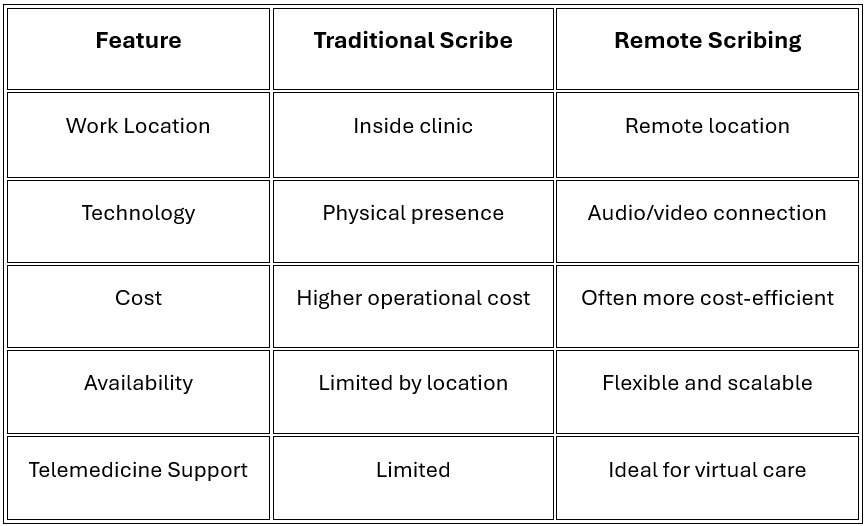
Remote Scribing vs Traditional Medical Scribes
Skills Required for a Virtual Medical Scribe
Successful remote scribes typically have a combination of medical knowledge and technical skills.
Key skills include:
- Strong understanding of medical terminology
- Familiarity with EHR systems
- Fast typing and accurate transcription
- Knowledge of HIPAA compliance
- Attention to detail
- Communication and listening skills
These competencies ensure that patient records remain accurate and clinically useful.
Who Should Hire a Virtual Medical Scribe?
Healthcare organizations that benefit most from remote scribing include:
- Primary care clinics
- Specialty medical practices
- Telemedicine providers
- Hospitals and large healthcare networks
- Multi-location clinics
Practices experiencing documentation overload or high patient volume often see the greatest impact from virtual scribing.
The Future of Virtual Scribing in Healthcare
As healthcare technology evolves, remote administrative roles are becoming more common.
Virtual medical scribes play a key role in modern healthcare operations because they:
- Improve documentation efficiency
- Support digital health systems
- Reduce provider burnout
- Enhance patient care quality
With increasing adoption of telemedicine and EHR systems, remote scribing is expected to continue growing in healthcare practices worldwide.
Final Thoughts
The growing administrative demands in healthcare have made virtual medical scribes an essential support role for modern clinics.
By adopting virtual scribing and remote scribing solutions, healthcare providers can improve documentation accuracy, increase patient engagement, and reduce physician burnout.
As digital healthcare continues to expand, virtual scribes will likely remain a critical part of efficient and patient-focused medical practices.
Frequently Asked Questions
How does a virtual medical scribe support physicians during patient visits?
A virtual medical scribe listens to patient consultations through secure audio or video connections and documents the encounter directly into the electronic health record. This allows physicians to focus on diagnosis and patient communication rather than typing notes during the appointment.
What technology is used in virtual scribing workflows?
Virtual scribing relies on secure communication tools, EHR systems, and medical documentation software. These systems allow remote scribes to access patient records, document encounters in real time, and update charts while maintaining compliance with healthcare privacy standards.
Can remote scribing improve clinical productivity?
Yes. Remote scribes reduce the time physicians spend on documentation and charting tasks. This often allows providers to see more patients per day while maintaining accurate records and high-quality patient interactions.
Is virtual scribing compliant with healthcare privacy regulations?
Professional virtual medical scribes are trained to follow HIPAA guidelines and use secure systems to handle patient information. Healthcare providers typically review and approve all documentation before it becomes part of the official medical record.
What specialties benefit most from virtual medical scribes?
Virtual scribing is commonly used in primary care, cardiology, dermatology, orthopedics, emergency medicine, and telemedicine practices where documentation workload is high.
Published on 12 Mar 2026
Author: Noor Ul Ain Liaqat